
General
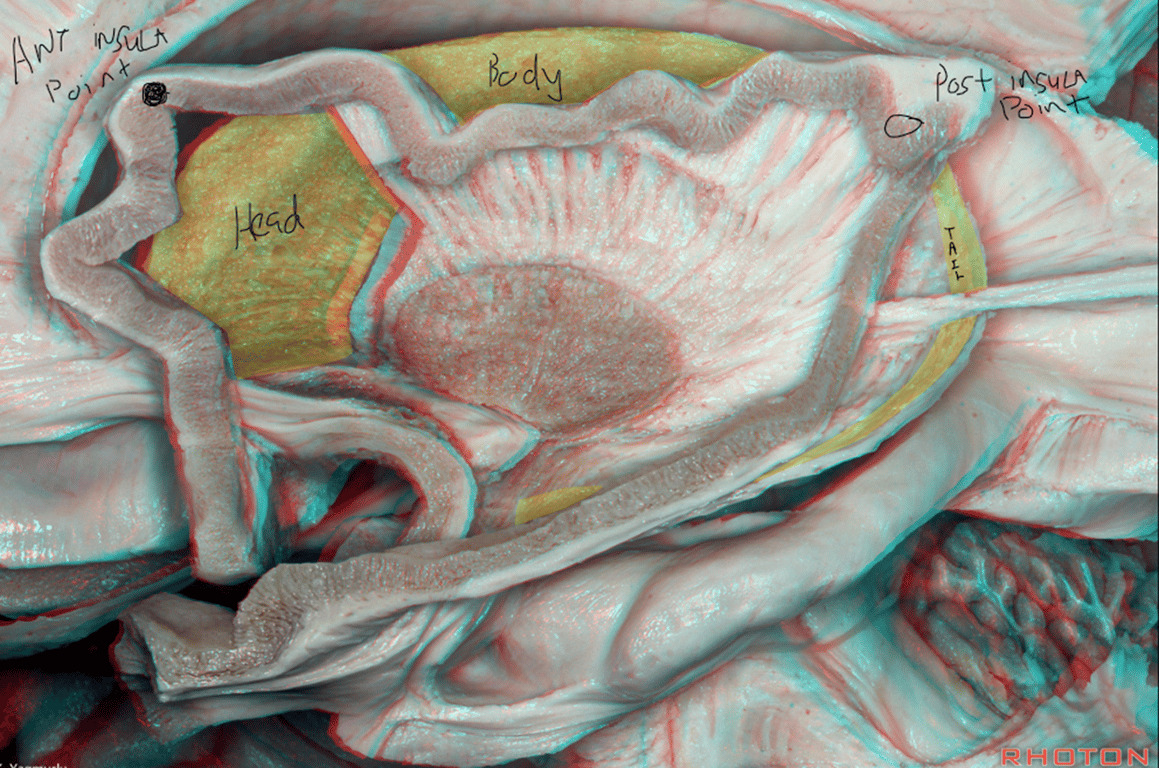
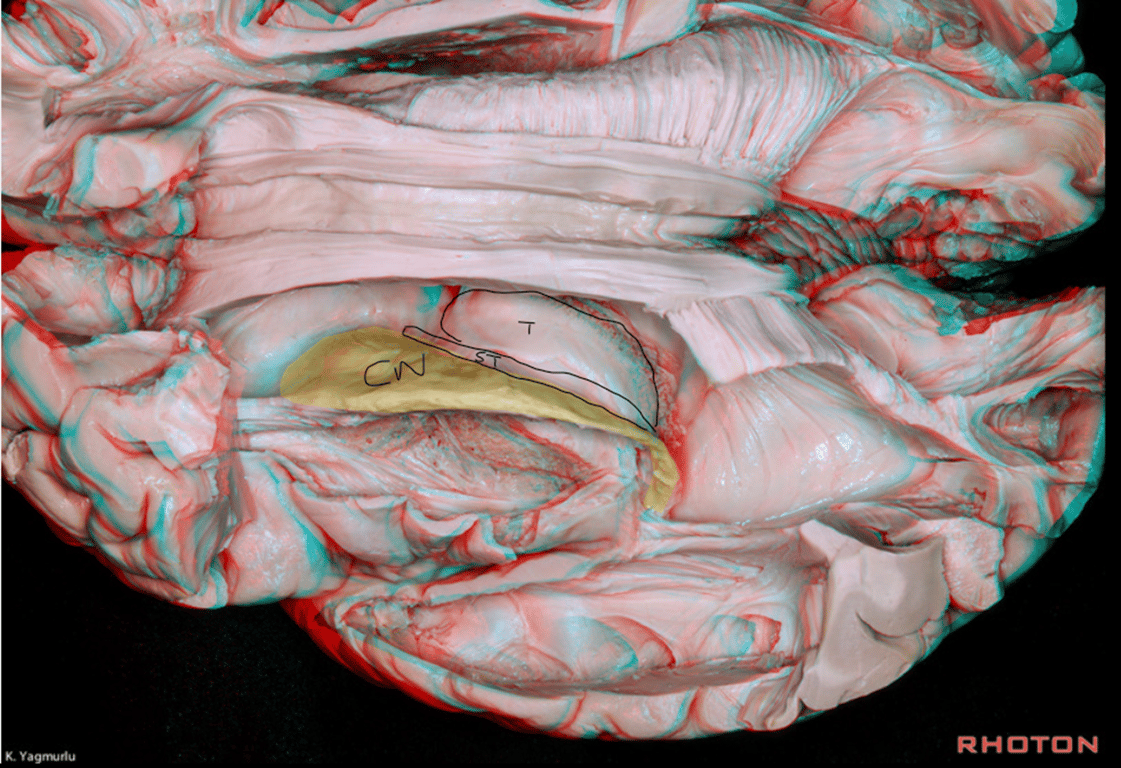
- The caudate nucleus is an arched, C-shaped, cellular mass that wraps around the thalamus and constitutes an important part of the wall of the lateral ventricle
Components
- Head
- Bulges into the lateral wall of the frontal horn and body of the lateral ventricle.
- Body
- Forms part of the lateral wall of the atrium,
- Tail
- Extends from the atrium into the roof of the temporal horn and is continuous with the amygdaloid nucleus near the anterior tip of the temporal horn.
In the lateral ventricle
- Body: the caudate nucleus is superolateral to the thalamus;
- Atrium: the caudate nucleus is posterolateral to the thalamus
- Temporal horn: the caudate nucleus is inferolateral to the thalamus.
Images
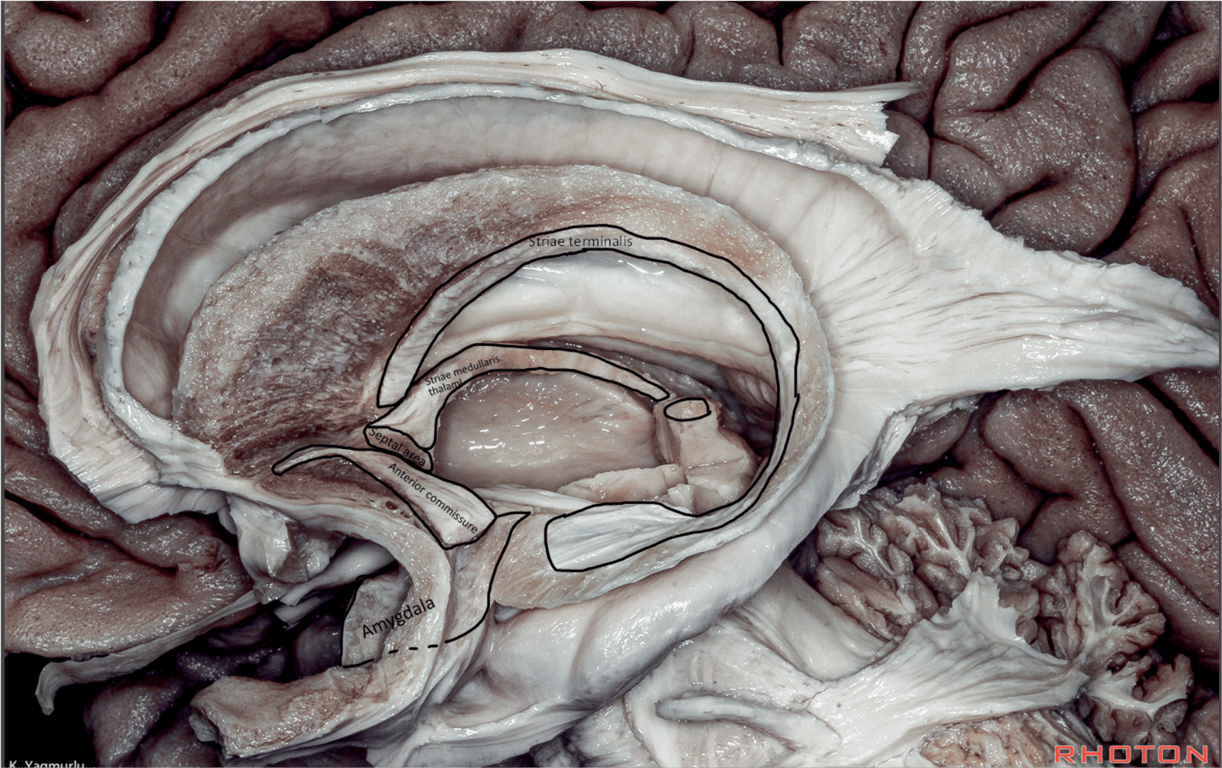
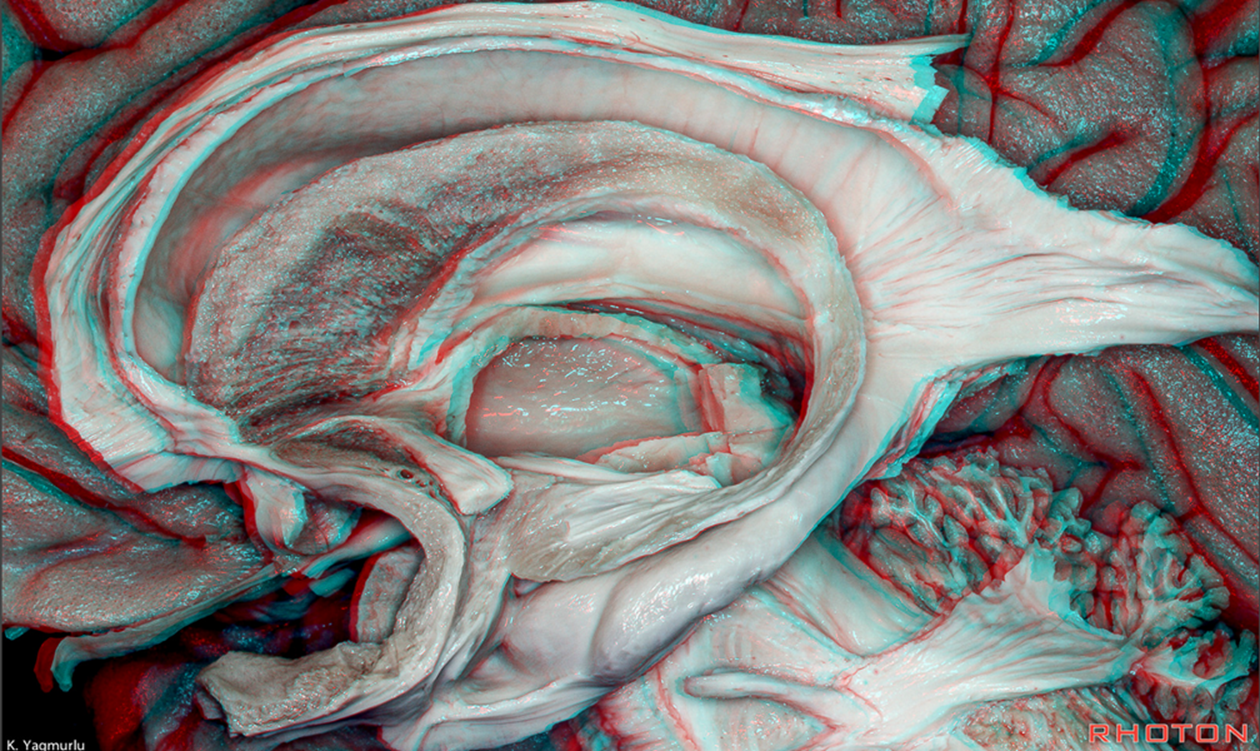
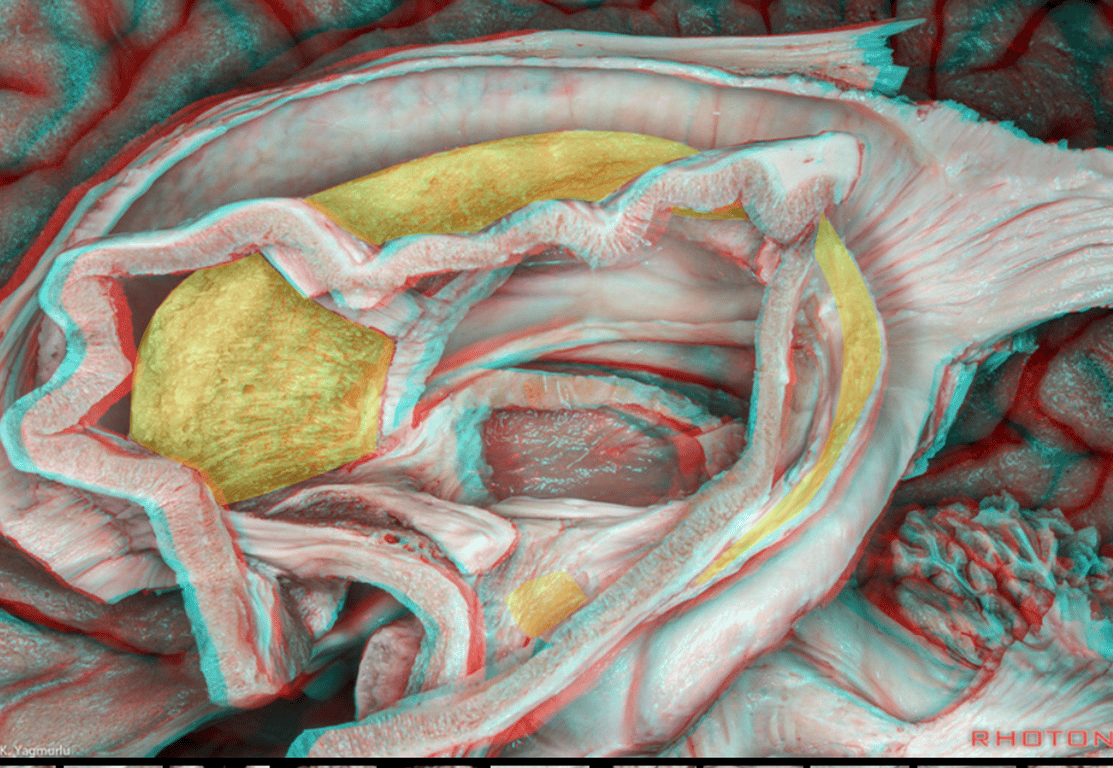
- Lateral view with thalamus removed showing 3rd ventricle (3rd).
- Stria terminalis (ST) arises from the septal area, which is located around the anterior commissure (AC) in the midline, and wraps around the thalamus to blend into the amygdala (A).
- The stria medullaris thalami (SMT) extends from the septal area to the habenula (H)
 Made with Bullet