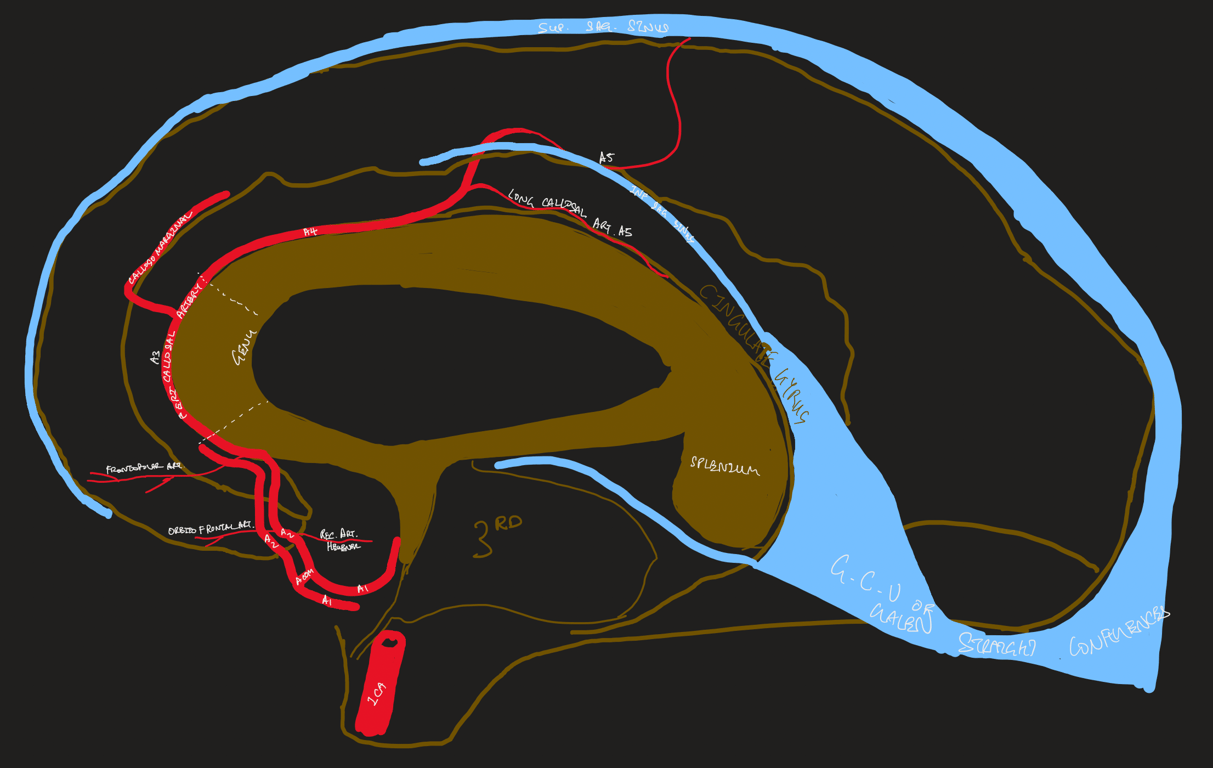
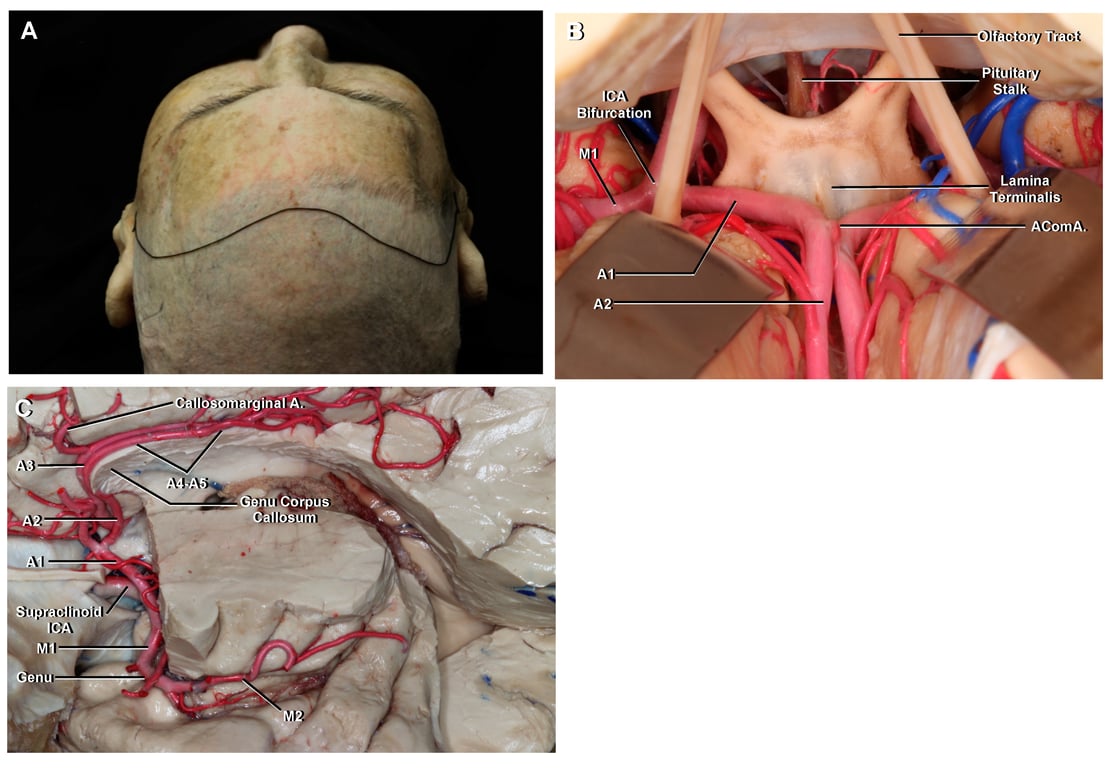
ACA (Anterior Cerebral Artery)

View Details
Status
Done

Segments

Horizontal/pre-communicating segment (A1)

  • 1-12 perforating arteries: Medial lenticulostriate/medial proximal striate arteries
  • Through anterior perforating substance to supply: Optic nerve + chiasm, ant hypothalamus, septum pellucidum , anterior commissure, Pillars of the fornix, Anteroinferior striatum

AComA

  • Located in cistern of lamina terminalis
  • Perforators (3 groups Serizawa classification) Melia 2014
      • Hypothalamic branches
        • being multiple and of small caliber and ending in the hypothalamic area.
      • Chiasmatic branches
      notion image
       
      Subcallosal artery (ScA)
      • Usually a single vessel and typically the largest of the arteries arising from the AcoA.
      • Supplies the
        • Bilateral subcallosal areas
        • Bilateral columns of the fornix
          • Injury: acute confusion due to Korsakoff’s syndrome
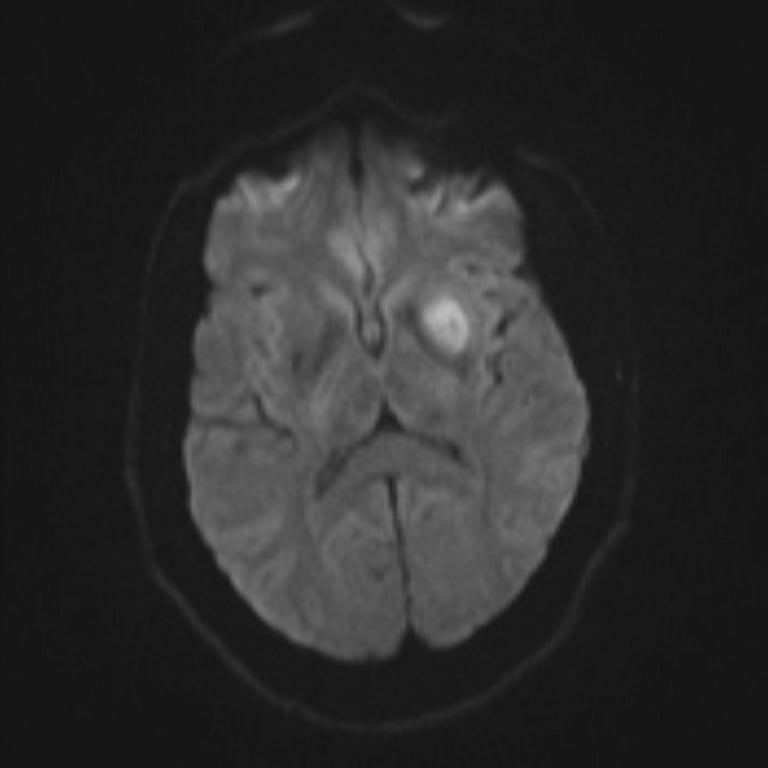
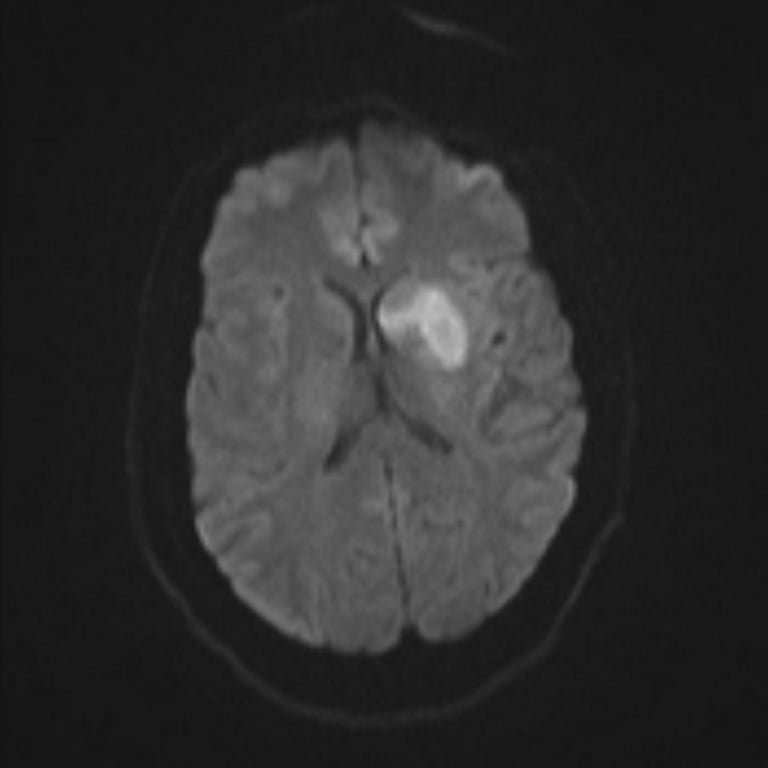
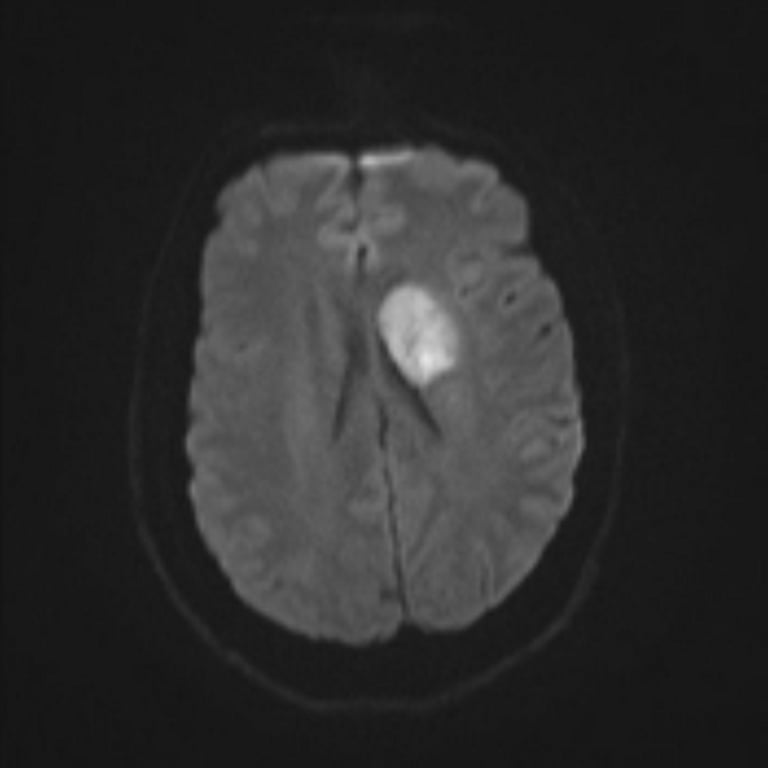
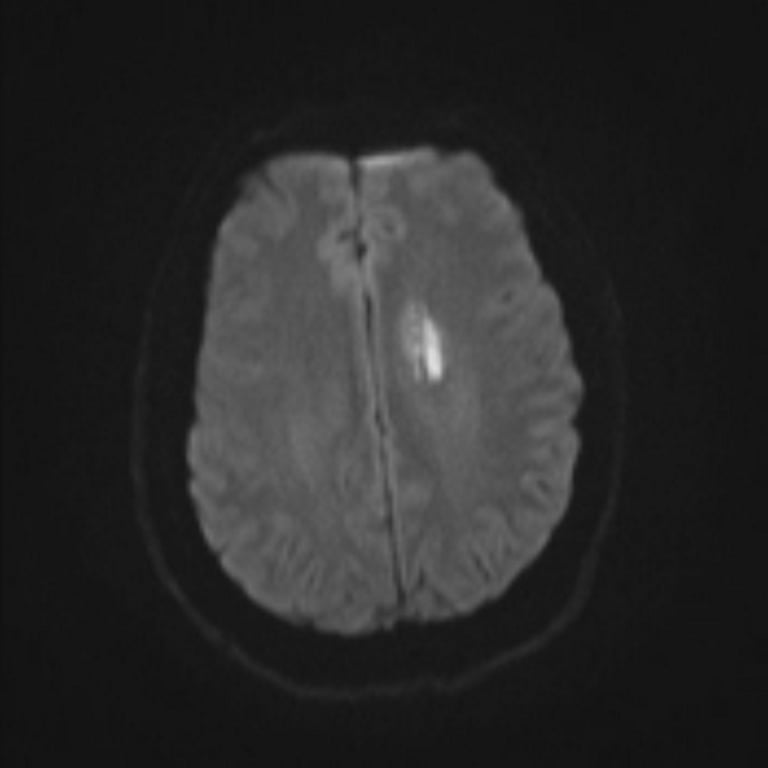
            • DWI MRI axial slides from caudal to cranial showing diffusion restriction in both columns of the fornix and the left side of the genu of the corpus callosum
              DWI MRI axial slides from caudal to cranial showing diffusion restriction in both columns of the fornix and the left side of the genu of the corpus callosum
              FLAIR MRI axial slides from caudal to cranial showing edematous swollen, hyperintensive both columns of the fornix and the left side of the genu of the corpus callosum
              FLAIR MRI axial slides from caudal to cranial showing edematous swollen, hyperintensive both columns of the fornix and the left side of the genu of the corpus callosum
        • Genu of the corpus callosum
      DSA of a left ICA injection. a Lateral view and b oblique view show the small-sized but visible ScA (arrows) originating from the AcoA complex
      DSA of a left ICA injection. a Lateral view and b oblique view show the small-sized but visible ScA (arrows) originating from the AcoA complex
      3D rotational angiography ap and lateral projection allowing a better visualization of the typical course of the ScA (arrows) ending in this particular case in the median callosal artery. Note the proximity of the ScA origin to the AcoA aneurysm
      3D rotational angiography ap and lateral projection allowing a better visualization of the typical course of the ScA (arrows) ending in this particular case in the median callosal artery. Note the proximity of the ScA origin to the AcoA aneurysm
  • Perforators supply:
    • Infundibulum
    • Optic chiasm
    • Subcallosal area
    • Preoptic hypothalamus
  • Aneurysm arises at bifurcation of ACOM and A1
    • Points towards opposite direction

Vertical/post-communicating segment (A2): Below corpus callosum

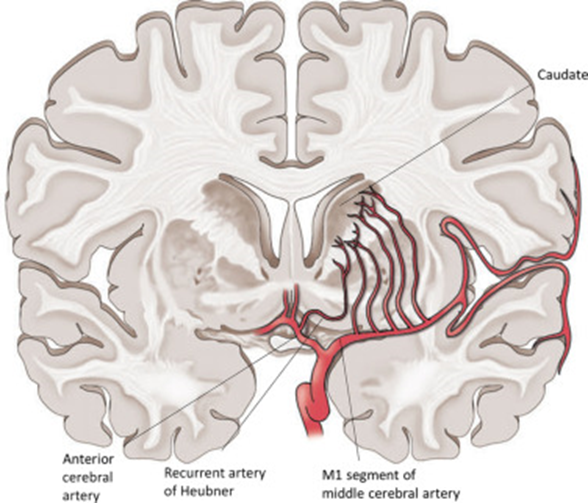
H, Recurrent artery of Heubner
notion image
  • AKA medical distal striate artery
  • This artery is the largest of the perforating branches of the ACA
  • Course generally follows the A1 laterally
  • Arises anywhere near A1-Acom-A2 J(x): most common @ proximal A2
  • Enters anterior perforating substance
  • Supplies:
    • Head of caudate
    • Anterior limb of internal capsule
    • Anterior putamen + Globus pallidus
    • Septal nuclei
    • Inferior frontal lobe
  • Easily clipped accidentally when targeting AComA → pure motor stroke
    • Unilateral
      • Weakness contralateral arm
      • Weakness contralateral face
      • Dysarthria
      • Hemichorea
    • Bilateral: akinetic mutism
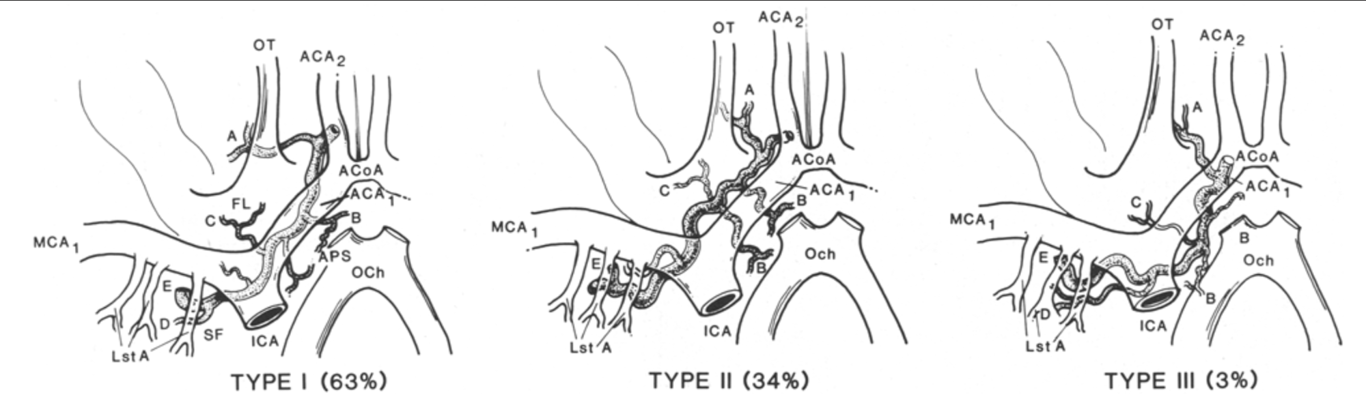
  • 3 variation in the course
    • notion image
    • (A); anterior perforated substance (APS) branches (B); frontal branches (C); Sylvian fissure branches (D); and terminal branches (E).
    • ICA = internal carotid artery; MCA~ = proximal middle cerebral artery; ACA~ = proximal anterior cerebral artery; ACA2 = distal anterior cerebral artery; ACoA = anterior communicating artery; FL = frontal lobe; SF = Sylvian fissure; OT = olfactory tract; Lst A = lenticulostriated arteries; OCh = optic chiasm.
notion image
notion image
notion image
 
notion image
 
notion image
Inferior aspect of the preoptic area. Double recurrent artery of Heubner (RAH) originating from a common trunk off the A₂ segment of the anterior cerebral artery (ACA₂). Note multiple perforating branches from the proximal anterior cerebral (ACA₁) and anterior communicating arteries (ACoA, arrow). OCh = optic chiasm; ON = optic nerve; OT = optic tract; GR = gyrus rectus; FL = frontal lobe.
 
Inferior view of the base of the brain. On the left, a double recurrent artery of Heubner (RAH), originating from a common stem (arrow 1) off the distal anterior cerebral artery (A₂). Note the early olfactory branch of the recurrent artery (OLF.Br). Frontal branches (arrow 2), Type 1 course (arrow 3), and the RAH perforating the brain in the anterior perforating substance are also shown (arrow 4). ON = optic nerve; OCh = optic chiasm; OT = optic tract; ACA₁ = proximal segment of the anterior cerebral artery; LT = lamina terminalis; GR = gyrus rectus.
 
Double recurrent artery of Heubner (RAH) with separate origins from the A₂ segment of the anterior cerebral artery (ACA₂) (arrows 1), as seen from the inferior aspect of the anterior circle of Willis. The proximal segment of the anterior cerebral artery (ACA₁) and its perforating branches (arrows 2) are also shown. Note the double anterior communicating artery (ACoA). GR = gyrus rectus; APS = anterior perforating substance.
Inferior view of the anterior circle of Willis in a specimen with an azygous anterior cerebral artery (AACA). On the left, the recurrent artery (RAH) originates from an early orbitofrontal branch (Of). On the right, the olfactory branch (Olf Br) of Heubner's artery runs parallel to the olfactory tract (OT). Note the accessory anterior communicating artery (ACoA). ON = optic nerve; OCh = optic chiasm; APS = anterior perforated substance; ACA₁ = proximal segment of the anterior cerebral artery; GR = gyrus rectus; CC = corpus callosum; R = brain retractor.
Inferior view of the rostral circle of Willis showing the Type I course (see text) of the recurrent artery of Heubner (RAH). Note the arachnoid strands (arrow 1) between the proximal anterior cerebral artery (ACA₁) and the RAH, as well as the attachment between the two vessels (arrow 2). ACoA = anterior communicating artery; FL = frontal lobe; ACA₂ = distal segment of the anterior cerebral artery; GR = gyrus rectus; R = brain retractor.
Inferior view of the anterior circle of Willis showing the point of penetration of the recurrent artery of Heubner (RAH) in the Type III course. The internal carotid bifurcation was lifted to show the entrance point (arrow 1) into the brain of the Heubner's artery, at the level of the Sylvian fissure (SF). Note the Sylvian branches of the recurrent artery (arrow 2). ON = optic nerve; MCA₁ = proximal middle cerebral artery; ACA₁ = proximal anterior cerebral artery; A₂ = distal anterior cerebral artery; OT = optic tract; GR = gyrus rectus; TL = temporal lobe; Ac.ACoA = accessory anterior communicating artery; APS = anterior perforating substance.
Orbitofrontal arteries
Frontopolar arteries

Distal ACA branches (A3): around level of genu corpus callosum

Callosomarginal artery
  • 2nd most common site for anterior cerebral artery aneurysm
  • present in approximately 50% of cases
  • Supplies the
    • superior frontal gyrus through various branches, taking a course through the cingulate sulcus.
    • It terminates as the paracentral artery supplying the paracentral lobule
Pericallosal artery/trunk
  • Its branches supply the
    • corpus callosum and its splenium,
    • septum pellucidum,
    • fornix,
    • precuneus cortex.
  • The cortical branches anastomose with the branches of the MCA and posterior cerebral artery

Cortical branches (A4/A5): Above corpus callosum


Anatomical variations

  • Unilateral hypoplastic Al segment
    • Usually associated with an ACOM aneurysm
  • 2 or 3 ACOMs are present in 40% of cases
  • Duplicated A1
  • If an A1 is hypoplastic, the recurrent artery could be large
  • Azygos ACA: the 2 ACAs form a single trunk, and there is no ACOM (present in 0.4 — 1% of the population)

Images
notion image
 
notion image