
Peroxisome
- Membrane-enclosed organelle involved in:
- β-oxidation of very-long-chain fatty acids (VLCFA)
- α-oxidation of branched-chain fatty acids
- Catabolism of amino acids and ethanol
- Synthesis of bile acids and plasmalogens (important membrane phospholipid, especially in white matter of the brain)
Disorders
- Zellweger syndrome
- Autosomal recessive disorder of peroxisome biogenesis due to mutated PEX genes
- Symptoms: Hypotonia, seizures, jaundice, craniofacial dysmorphia, hepatomegaly, early death
- Refsum disease
- Autosomal recessive disorder of α-oxidation → Buildup of phytanic acid due to inability to degrade it
- Symptoms: Scaly skin, ataxia, cataracts/night blindness, shortening of 4th toe, epiphyseal dysplasia
- Treatment: Diet, plasmapheresis
- Adrenoleukodystrophy
- X-linked recessive disorder of β-oxidation due to mutation in ABCD1 gene → VLCFA buildup in adrenal glands, white (leuko) matter of brain, testes
- Progressive disease leading to adrenal gland crisis, progressive loss of neurologic function, death
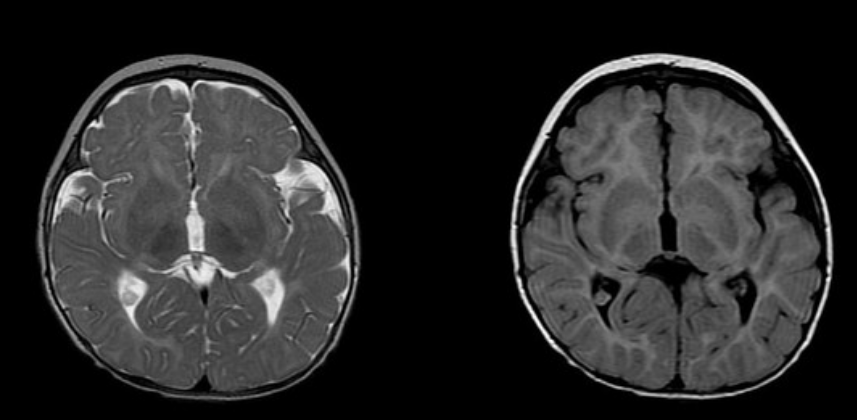
- Pelizaeus-Merzbacher disease:
- X-linked leukodystrophy which is characterised by an arrest in myelin development.
- Mutation, deletion or duplication of the proteolipidprotein (PLP1) gene locus at Xq22.
- Leukodystrophy with significant Sudan staining.
- Typically symptomatic during the first months of life.
- Survival may extend into the third decade of life.
- Most affected individuals are male.
- Lack of myelination, often seen as low T1 signal regions typically involving internal capsule, proximal corona radiata and the optic radiation
- X-linked adrenoleukodystrophy:
- Rapidly evolving brain damage in male infants or boys.
- Survival usually limited to 3 years.
- Accumulation of long-chain fatty acids in adrenal cortical and other cells.
- Results in adrenal insufficiency and CNS disease.
 Made with Bullet