
General
- ICA dissection following blunt cervical trauma is much more common
- Not discussed here
- Nomenclature
- Dissection:
- Extravasation of blood between the intima and media, creating luminal narrowing or occlusion.
- Dissecting aneurysm
- Dissection of blood between the media and adventitia, or at the media, causing aneurysmal dilatation, which may rupture into the subarachnoid space.
- Pseudoaneurysm
- Rupture of artery with subsequent encapsulation of the extravascular hematoma, may or may not produce luminal narrowing.
Pathophysiology
- All dissections is caused by a haemorrhage outside of the vascular lumen due to pathological trans-intimal extravasation of blood from the true lumen into the vessel wall.
- Hematoma can dissect the
- Internal elastic membrane from the intima causing narrowing of the true lumen,
- Dissect into the subadventitial plane producing an adventitial outpouching from the vessel wall (pseudoaneurysm).
- Rupture through the vessel wall producing SAH
- Subintimal dissection is more common with intracranial dissections, whereas extracranial vessels (including the aorta) usually dissect at the media or between media and adventitia.
- “Spontaneous” dissections have been associated with:
- Fibromuscular dysplasia (FMD):
- Found in ≈ 15% of cases
- Cystic medial necrosis (or degeneration):
- Originally thought to be a common finding, now thought to perhaps be linked to a higher likelihood of fatal dissection
- Saccular aneurysm
- Marfan syndrome:
- Autosomal dominant inherited disorder of connective tissue.
- Phenotypic manifestations are due to production of abnormal fibrillin,
- Main component ofextracellular microfibrils,
- Component in the media of certain blood vessels, encoded by the FBN1 gene on chromosome 15q21
- Ehlers-Danlos syndrome
- Atherosclerosis:
- Only rarely implicated as an etiology.
- More likely to be a factor with subintimal dissection of extracranial arteries
- Takayasu’s disease
- Medial degeneration
- Syphilitic arteritis
- More common in the past, associated with 60% of dissections before 1950
- Autosomal dominant polycystic kidney disease:
- Associated with a higher incidence of cerebral aneurysms
- Variant periarteritis nodosa
- Allergic arteritis
- Homocystinuria
- Moyamoya disease
- Strenuous physical activity
Epidemiology
- Age of ≈ 45 yrs
- Average age of traumatic dissections is slightly younger
- More frequent in men.
- Incidence is unknown
- Often times the condition produces mild, transient symptoms. Increased awareness of the condition has resulted in an increased rate of diagnosis. ICA dissection accounts for 1–2.5% of first strokes.5 However, in middle aged and young adults it comprises 10–25% of strokes.6
Sites of dissection
- Multiple dissections occur in ≈ 10% (the most common: bilateral vertebrobasilar lesions).
- Spontaneous intracranial dissections by site
- Previously, it was believed that the ICA was the most common site. This change may be due to the recent increased recognition of arterial dissections as a source of SAH (and vertebral dissections most often present as SAH).
Location | Left | Right | Total |
Vertebral | 122 | 82 | 204 |
Basilar | N/A | N/A | 35 |
Internal carotid | 17 | 13 | 30 |
Middle cerebral | 16 | 10 | 26 |
Anterior cerebral | 10 | 3 | 13 |
Posterior cerebral | 7 | 9 | 16 |
PICA | 4 | 10 | 14 |
Total | 176 | 127 | 338 |
Clinical presentation
- Cerebral arterial dissections may cause symptoms by:
- Embolization secondary to:
- Platelet aggregation stimulated by the exposed surfaces
- Dislodged thrombus (formation of which is enhanced by reduced flow)
- Reduced distal flow secondary to:
- Thrombosis due to reduced flow
- Occlusion of the true lumen by the expansion of the mural hematoma
- Subarachnoid haemorrhage (atypical presentation, may be more common with posterior circulation dissection than with anterior circulation)
- <30 yrs
- Most common cause due to internal carotid dissection without SAH.
- >30 yrs
- Vertebrobasilar artery (VBA) dissection with SAH was the most common.
- Headache
- Severe
- Predates neurologic deficit by days or weeks.
Evaluation
- CT. More useful for evaluating brain for infarction. Dissection can sometimes be visualized directly.8
- CT angiogram (CTA). Often obviates the need for cerebral angiography since CTA scanners with ≥ 16 detectors are equal in predictive value and have an accuracy near 99%.
- Angiography.
- The definitive diagnostic study.
- Diagnosis of dissection may be delayed if it is misinterpreted as:
- An unusual saccular aneurysm
- Most common error
- Atherosclerotic lesions:
- With dissections, the location is unusual, the lesion may be isolated, the age is usually younger, and the stenosis is smooth.
- Cervical ICA dissection typically spares the carotid bulb whereas cervical ICA atherosclerosis tends to involve the bulb.
- Vasospasm following SAH:
- However, the narrowing with vasospasm is delayed in onset vs. the changes with dissection which are present from the beginning
- Angiographic findings may include:
- Luminal stenosis:
- Irregular stenosis over long segments of the artery often with focal areas of near total stenosis (“string sign”)
- Fusiform dilation with proximal or distal narrowing (string and pearl sign)
- Occlusion:
- Artery usually tapers to a point
- Intimal flap:
- When seen, usually found at proximal end of dissection
- May see proximal beading (“string of beads” configuration, indicative of FMD)
- “Double lumen sign”:
- True vessel lumen and an intramural false lumen with an intimal flap. Usually with retention of contrast within the false lumen well into the venous phase. The only pathognomonic sign
- Wavy “ripple” appearance
- Severe kinking
- Frequently bilateral.
- With vertebrobasilar artery lesions: dolichoectasia
- A characteristic of arterial dissections is that they often change configuration on repeat angiography (some resolve, and some worsen).
- Forceful intra-arterial contrast injection during the performance of angiography carries a potential for worsening the dissection.
- MRI
- Probably not as accurate as CTA or angiography.
- Optimal MRI study is source T1WI axial images with fat suppression (“fat sat”),
- Look for loss of visualization over several slices, with good visualization above and below.
- May visualize intimal flap and distinguish a dissection from a fusiform aneurysm.
- Crescent sign:
- Bright signal in wall of ICA on T2WI axial images (hematoma in vessel wall).
Overall outcome
- Overall mortality of 26%
- Mortality in first few weeks of presentation with vertebrobasilar artery (VBA) dissection can be as high as 83% .
- Mortality by location
- ICA lesions 49%
- VBA lesions 22%
- Mortality by presentation
- SAH 24%
- Non SAH 29%
- 70% had a favourable outcome (assessed using Glasgow Outcome scale), 5% poor.
Vessel specific information
- Internal carotid dissection
- Posttraumatic ICA dissection is much more common than spontaneous.
- Some cases considered “spontaneous” may actually be due to trivial trauma, including violent coughing, nose blowing, and simple neck turning.
- Usually seen in young women.
- Clinical presentation (for spontaneous dissection)
- Pain
- Ipsilateral headache (Most common)
- Orbital or periorbital (60%)
- Auricular or mastoid (39%),
- Frontal (36%)
- Temporal (27%).
- Carotidynia: Sudden onset of severe pain over carotid artery
- Incomplete Horner syndrome (oculosympathetic palsy):
- Ptosis and miosis without anhidrosis (due to involvement of plexus around the ICA, sparing the ECA plexus which innervates facial sweat glands) may occur.
- Bruits
- Clinical features of spontaneous ICA dissection
- May be a cause of some cases of infantile and childhood hemiplegia and hemiparesis.
Feature | % |
Focal cerebral ischemia | 76 |
Headache | 59 |
Oculosympathetic palsy | 30 |
Bruit | 25 |
Amaurosis fugax | 10 |
Neck pain | 9 |
Syncope | 4 |
Scalp tenderness | 2 |
Neck swelling | 2 |
- Vertebrobasilar system artery dissection
- General information
- Less common than carotid.
- Extracranial lesions outnumber intracranial.
- Traumatic dissections located
- Where VA crosses bony prominences
- At the C1–2 junction or where it enters the foramen transversarium (usually at C6).
- Spontaneous dissections
- Located intracranial
- Commonly occur on the dominant VA.
- Unlike cervical ICA dissections, which tend not to propagate intracranially through the carotid canal, high cervical VA dissections can readily propagate intracranially through the foramen magnum.
- Associated with
- FMD
- Migraine
- Oral contraceptives.
- Unrecognized or forgotten trauma or sudden head motion may have occurred in some cases reported as spontaneous.
- Commonly occurs in young adults (mean age: 48 yrs).
- 36% of patients have dissections at other sites, 21% of cases have bilateral VA dissections.
- Dissecting aneurysms of the VA (possibly a distinct entity) are also described.
- Fusiform
- May be amenable to clipping,
- As of 1984, only ≈ 50 cases of dissecting aneurysms were published.
- Presentation
- Neck pain (most)
- Located over the
- Occiput
- Posterior cervical
- Headache
- Severe
- TIAs or stroke
- In the form of
- Lateral medullary syndrome
- Cerebellar infarction
- Especially in patients with occlusion of the third or fourth portion of the VA
- None of 5 patients developed new neurologic symptoms after the original stroke in an average of 21 months follow-up.
- In 3 of these 5, VA dissection was bilateral.
- Altered consciousness
- SAH
- Seen in 6 of 30 cases of vertebrobasilar complex dissections.
- Rebleeding
- In 24–30% of those cases presenting with SAH,
- Causes a very high mortality.
- Traumatic extradural dissections or pseudoaneurysms may have a similar presentation, but can also produce massive external hemorrhage or neck hematomas.
- Evaluation
- Angiography.
- May be difficult in many cases
- The most common misdiagnosis is ruptured saccular aneurysm of unusual shape
- In posttraumatic dissections, the most common finding is irregular stenosis of horizontal loops of distal extracranial VAs as they pass behind C1, often bilateral.
- In 14 of 15 posttraumatic VA dissections, the lesion was located posterior to the atlas (distal extracranial 3rd segment),
- Single exception being a patient with direct trauma causing proximal VA involvement.
- This predilection is possibly explained by the fact that the first and third portions of the VA are movable, whereas the second and fourth are relatively immobilized by bone.
- Treatment
- Medical treatment
- Unless has hemorrhage or large ischemic stroke, medical therapy should be started ASAP.
- Anticoagulation
- Start heparin
- Followed by oral agents (e.g. Coumadin) probably for a total of 6 months.
- Recent preliminary study showed antiplatelet therapy was equally as effective.
- Endovascular treatment.
- Indications for surgical or endovascular intervention.
- SAH (due to their propensity to rebleed) + Intradural dissections.
- Extradural lesions with
- Dissections that progress (angiographically) OR
- Persistent symptoms in spite of adequate medical therapy.
- Medical therapy is
- Ineffective
- Contraindicated
- Dissection causes symptomatic flow-limiting stenosis.
- As with traumatic dissections, endovascular techniques are now assuming a more prominent role in management of spontaneous dissections
- Given the small number of patients treated and the fact that medical therapy is generally effective, the role of stenting for dissection remains to be defined.
- Techniques
- Stents (mainly)
- Types of stents used
- Balloon-mounted
- Self-expandable
- Covered stents
- Occlusion
- Angioplasty
- Surgical treatment.
- Indicated
- Medical and endovascular tx is not possible and further progression of clinic symptoms
- Intraoperative identification of site of dissection:
- Fusiform or tubular enlargement of the artery with discoloration due to blood within the arterial wall (the discoloration has been described as black, bluish, purple, purple red, or brown).
- Surgical treatment of intradural dissection when endovascular techniques are not an option includes the following alternatives:
- Non-clippable aneurysms may be candidates for Hunterian occlusion of the VA proximal to the BA
- Either by microsurgical technique, or by endovascular techniques which may not be as precise
- Some may not tolerate clipping the dominant VA, especially if the contralateral VA is hypoplastic. Conversely, some may tolerate bilateral VA occlusion.
- Balloon test occlusion is recommended:
- If the dissection involves the PICA origin, then clip proximal to dissection.
- PICA then fills from retrograde flow, and the reversal of flow across the site of dissection should push the intima back against the wall
- If the dissection is proximal to PICA and doesn’t involve PICA, then trap the aneurysm between clips. PICA fills by retrograde flow
- If the aneurysm begins distal to the PICA origin, occlude the VA distal to the PICA takeoff
- Combining VA clipping (non-clippable aneurysms may be candidates for Hunterian occlusion of the VA proximal to the aneurysm) + Vascular bypass, options:
- Side-to-side PICA-PICA anastomosis
- Transplantation of the PICA origin to the VA outside the aneurysm
- Occipital artery-to-PICA bypass
- Resection accompanied by autogenous interposition vein graft
- Non-occlusive surgical techniques
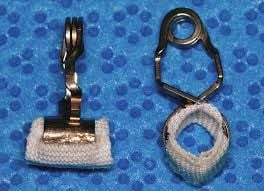
- Clipping with specially designed clips for fusiform aneurysms (e.g. Sundt-Kees clip)
- Wrapping: of dubious benefit
- Vertebrobasilar system dissections excluding the VA
- Basilar artery dissections tend to present with brainstem infarction and more rarely with SAH.24 The prognosis is generally regarded as poor. Endovascular techniques may be able to treat some.
 Made with Bullet